
The Right Way to Construct a Bathroom in Indore — Waterproofing, Slope, and Fixtures

Building a bathroom is not just about selecting attractive tiles and modern fixtures. Proper waterproofing, floor slope, drainage, plumbing, and fixture installation are essential for a bathroom that remains functional and free from leakage problems.
1. Start With Proper Waterproofing
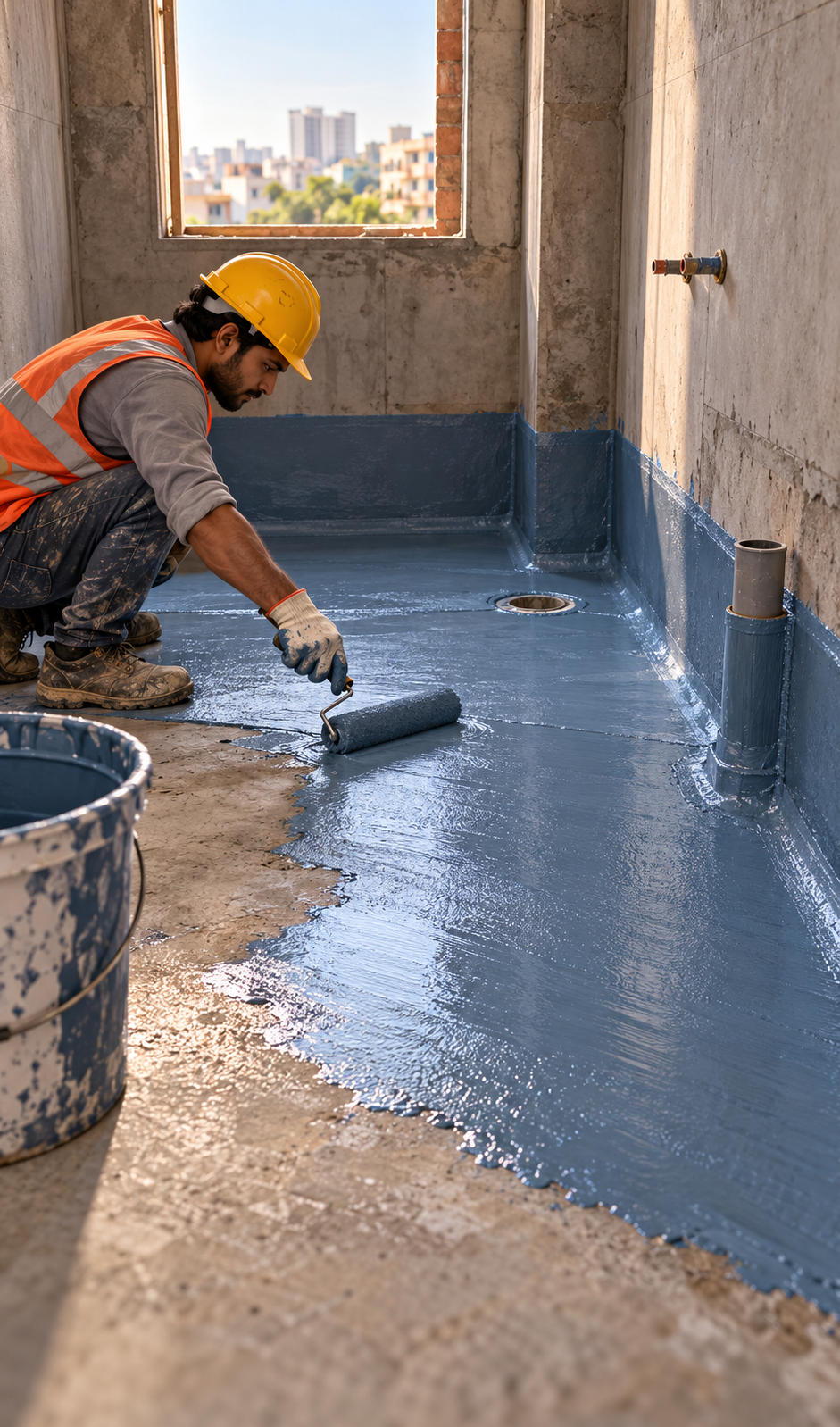
Waterproofing is one of the most important stages of bathroom construction. A proper waterproofing system should cover the bathroom floor and appropriate portions of the walls, with special attention given to corners, pipe penetrations, and floor-wall junctions.
The surface must be properly prepared before waterproofing is applied. Skipping this step or using an improper system can eventually allow water to seep into the surrounding structure.
Good waterproofing is protection beneath the finished bathroom—not something that can be fixed after leakage starts.
2. Get the Bathroom Floor Slope Right
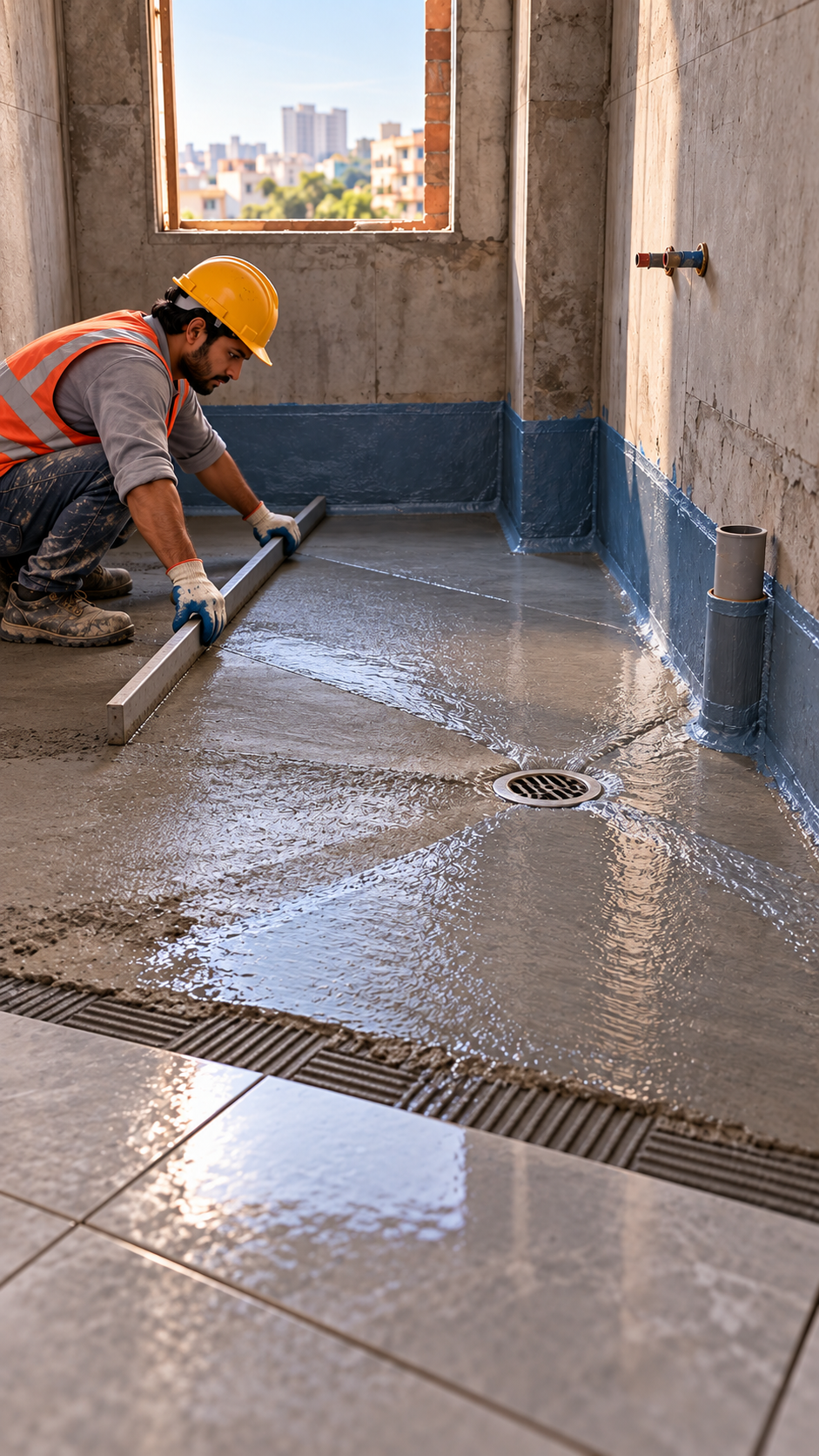
Water should naturally flow toward the floor drain without leaving puddles behind.
The bathroom floor should have a properly planned slope toward the drain. The exact slope depends on factors such as the bathroom size, drain position, and tile layout.
A bathroom can have excellent waterproofing and still develop problems if the floor slope is incorrect.
The goal is simple: water should move toward the drain instead of collecting on the floor.
3. Plan Drainage Before Laying Tiles
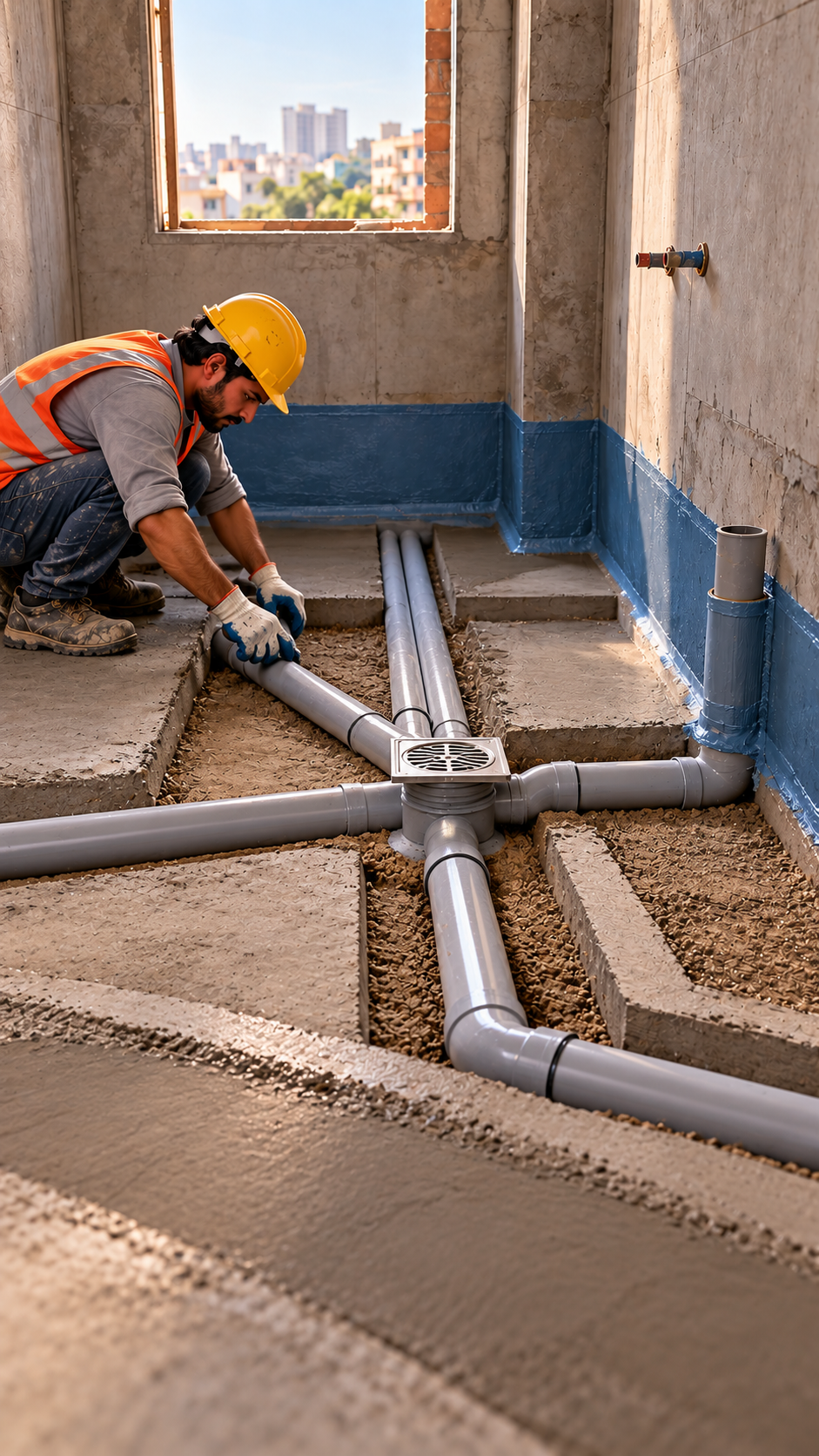
Drainage and plumbing should be planned before the final floor and tiles are installed.
The position of the floor drain should allow the surrounding floor to slope toward it efficiently. Waste pipes should also be properly connected and installed with an appropriate gradient.
Once the tiles are installed, correcting badly positioned drainage can become difficult and expensive.
Plan the plumbing first, then build the finished floor around it.
4. Install Bathroom Fixtures Carefully
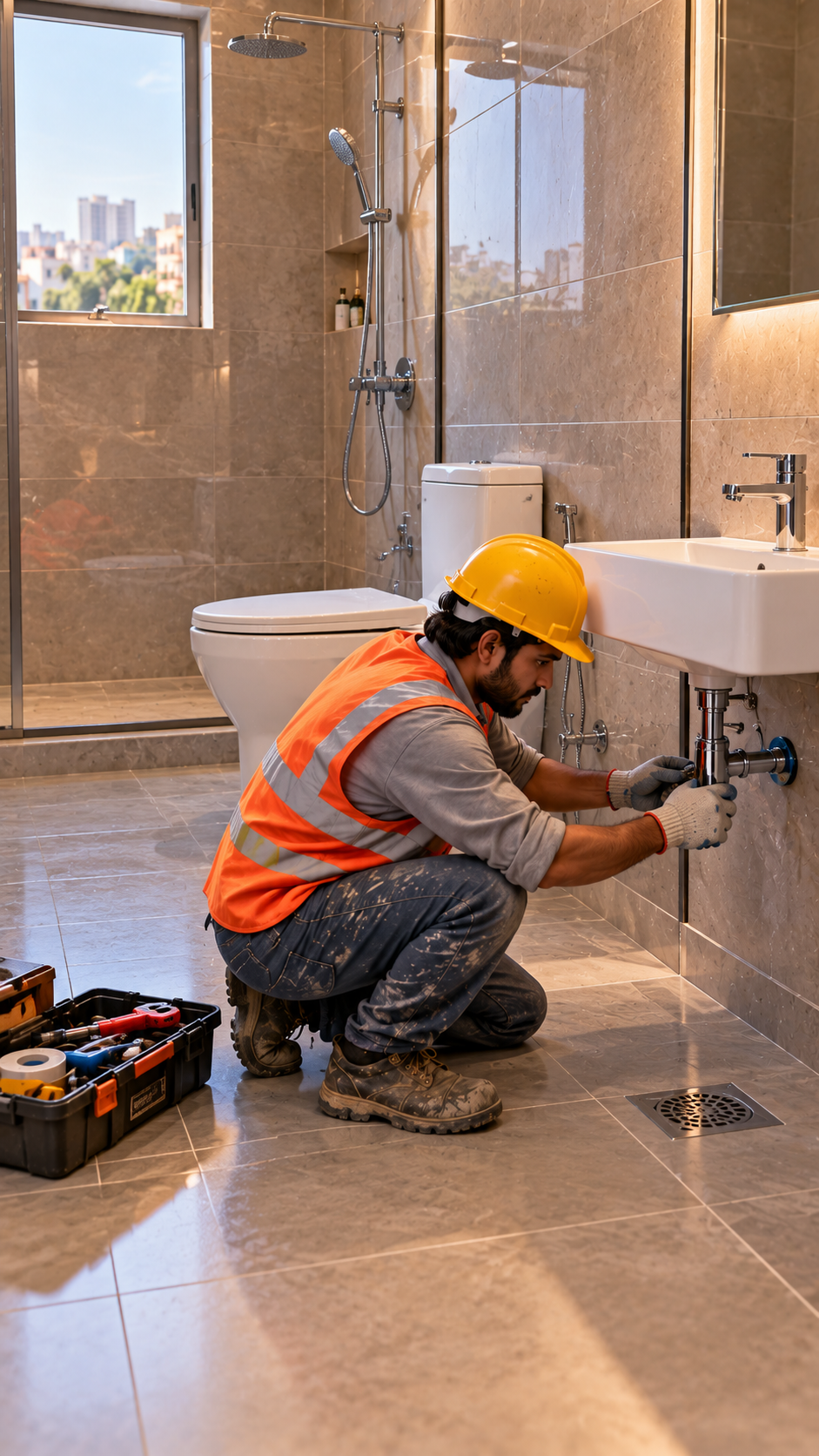
After waterproofing, plumbing, floor preparation, and tiling are completed, fixtures such as the WC, wash basin, shower, taps, and other fittings can be installed.
Every connection should be properly aligned, sealed, and tested for leakage. Fixtures should also be securely fixed rather than relying only on sealant.
Proper installation not only improves the appearance of the bathroom but also reduces the chances of plumbing problems later.
5. Test Everything Before Handover
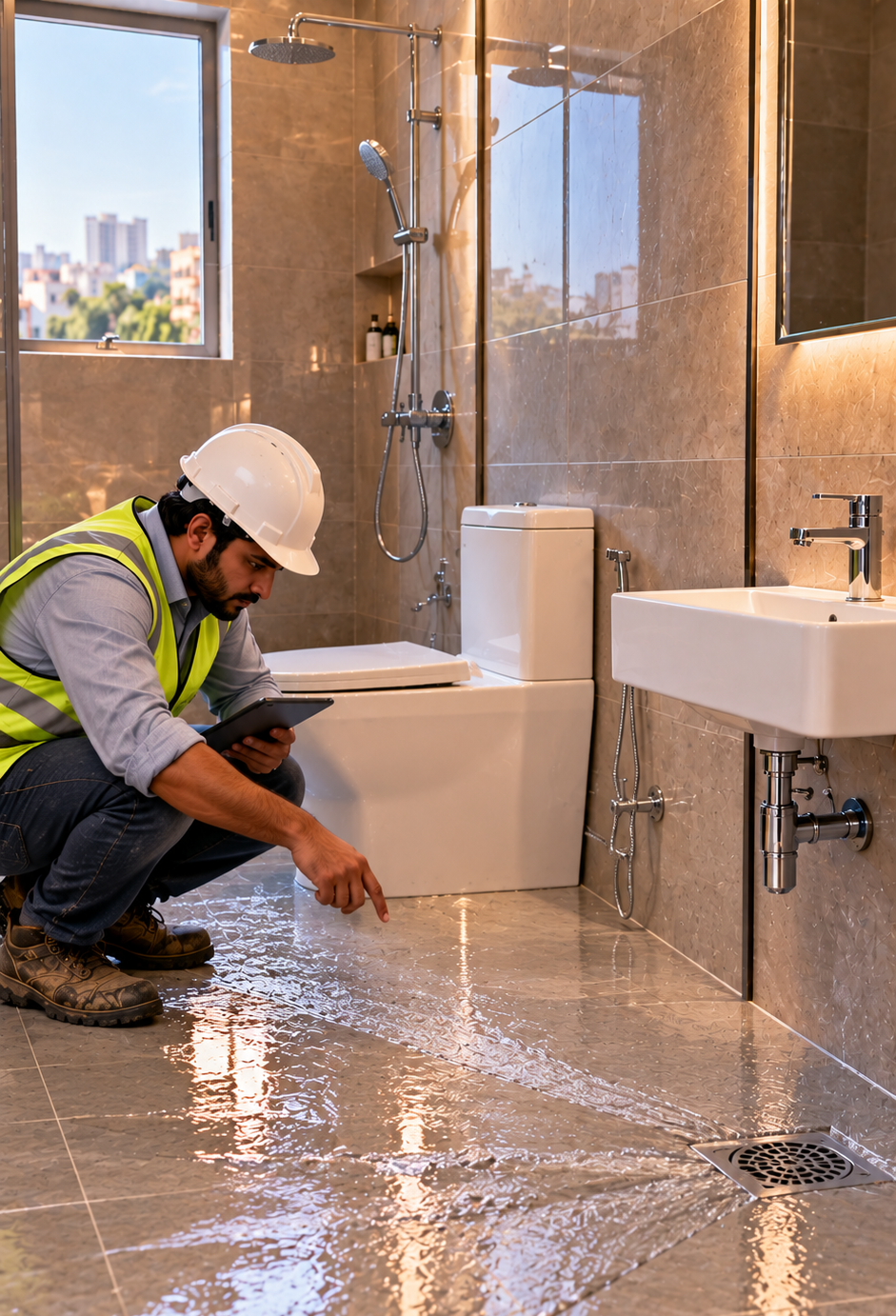
Before considering the bathroom complete, test the entire system.
Run water across the floor and check whether it reaches the drain properly. Inspect plumbing connections, taps, WC connections, and other fixtures for leaks.
Testing before handover can identify problems while they are still easy to correct.
Final Takeaway
A well-built bathroom starts from the layers underneath the tiles.
Waterproofing → Plumbing → Floor Slope → Drainage → Tiles → Fixtures → Testing
Getting these fundamentals right can help prevent common problems such as water leakage, standing water, poor drainage, and fixture leaks.


Comments